‘Last Wednesday was the last JSBP field excursion.’ My heart aches as those words ring repeatedly between my ears. I can’t describe how lucky I’ve been to hang with such a great group of people for these last few months. Our weekly trips have aroused my interest and provoked lots of reflection, but more significantly have been a lot of fun. Every field excursion has felt like a time warp for me. For a couple hours every Wednesday I’ve traveled back to grade school on a class trip, walking through museums with a chaperone while simultaneously attempting to trip Alex into an exhibit. It’s been a nostalgic experience that I’ll value forever. I’ll continue to post on the blog as I ponder further into the things I’ve seen over the semester.
 |
| Kurk Dorsey, quite a stylish historian |
It was a sad Wednesday for the crew. The weather was cold and dreary and our finals were looming around the corner. The examination of the Holocaust’s effect on Hungarian Jews was not the best way to cheer us up.
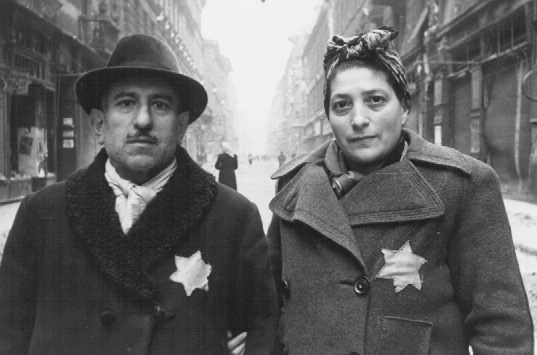
The Museum was built and funded by the Hungarian government because it wanted to publically address some of the faults the state had committed during World War Two. Hungary was the first nation to pass anti-Semitic legislation. They did so almost twenty years before the outbreak of Nazi Fascism across Europe. The Jewish people have been living in Hungary since the times of the Roman Empire, and the population held a large percentage of positions in the learned professions of the nation. Doctors, lawyers, business owners and schoolteachers were often Jewish. This is in part because of the large emphasis that the Jewish faith places on literacy and education. Tension between the Magyar people and the Jews existed in Hungary long before the Second World War.
 |
| Budapest's Jewish Ghetto |
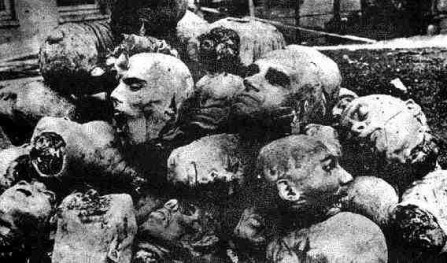
During the war Hungarian Jews were all but completely removed from Magyarorszag. The Jewish population within Hungary prior to the Holocaust was around five percent. After the massacres and mass deportations of the Judaic people their stake in the population sank below one percent. The Nazis and the Hungarian Arrow Cross Party forcibly removed 447,000 Jews from Hungary. Out of the 1.1 million victims of the Auschwitz concentration camp, one in every three was a Magyar of Jewish descent.
 |
| Auschwitz |
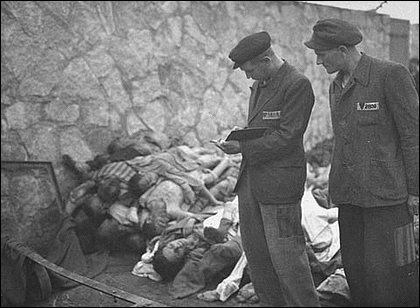
The exhibits throughout the museum attempted to portray the horror that the Hungarian Jews lived through during the early and mid 1940s. Our guide exposed us to the plight of the Magyar Jew during this disgusting time period, and often did so through the stories of individual's who saw the persecution first hand. The Holocaust is the most horrible thing that I’ve ever learned about extensively, and is honestly a subject that is very hard for me to reflect upon too deeply. As I walked by exhibit after exhibit it was hard to keep anger out of
my own mind. Seeing people starved into skeletons and left to die in the cold is quite rattling. Hearing about children who were injected with viruses in order to examine how long they would last before infection and death is not something one should ponder all day.
 |
| Children at Auschwitz |
At the end of our tour of the museum the guide explained that the point of the exhibit was to expose the dangers of extremist ideologies to Hungarian students. Certain movements that may seem completely innocent at first can turn into the brutal massacre of innocent human beings. Racism is the most evil and stupid form of human thought. The fact that people acted upon these wicked contemplations in such recent history is mind boggling, and is also incredibly depressing.